

Pharmaceutical
Product classification
Contact us
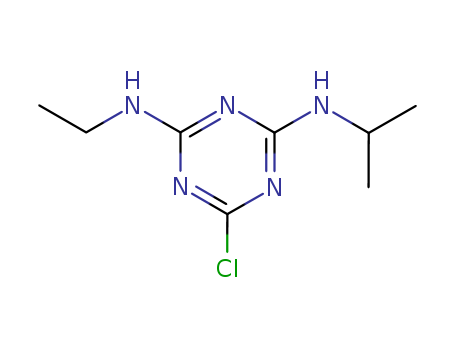
Quality products?make an important contribution to long-term revenue and profitability. Chinese Factory Supply Wholesale Atrazine 1912-24-9 with Cheap Price
1.What is the Atrazine ?
Chlorotriazine herbicides have the characteristic triazine (three-nitrogen) aromatic ring, with one chlorine substituent. Chloro-s-triazines may have substitution at the R1 (2 position) by chlorine, thiomethyl, or methoxy. The more extensively studied ones include atrazine (6-chloro-N-ethyl-N0-isopropyl- 1,3,5-triazine-2,4-diamine), simazine (2-chloro-4,6-bis (ethylamino)-s-triazine), propazine (2-chloro-4,6-bis (isopropylamino)-s-triazine), and terbuthylazine (2-(tertbutylamino)- 4-chloro-6-(ethylamino)-s-triazine). Atrazine and simazine are selective pre- and postemergence herbicides used on crops for control of broad leaf and grassy weeds and in rights-of-way maintenance. Atrazine, first marketed in 1957, is widely used on cauliflower, corn, sorghum, and sugarcane, and in noncropped areas such as wheat fallow. Simazine, introduced in 1956, is used on corn, almonds, grapes, and oranges. Major triazine use occurs in the midwestern cornbelt region of the United States.
-
-
108-77-0
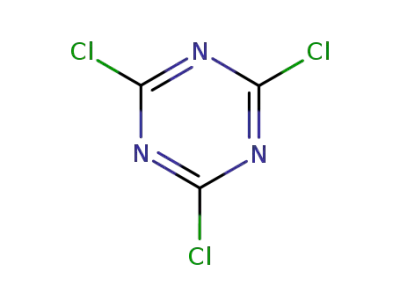
1,3,5-trichloro-2,4,6-triazine

-

-
75-04-7,85404-22-4
ethylamine
-

-
75-31-0
isopropylamine

-
-
1912-24-9,93616-39-8
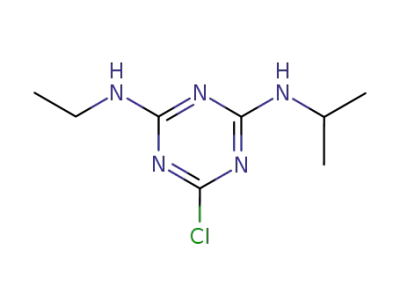
6-chloro-N-ethyl-N'-isopropyl-1,3,5-triazine-2,4-diamine
| Conditions | Yield |
|---|---|
|
1,3,5-trichloro-2,4,6-triazine;
With
potassium chloride; sodium chloride; potassium bromide; magnesium chloride;
In
water;
at 3 ℃;
for 0.233333h;
isopropylamine;
In
water;
at 0 - 15 ℃;
for 1.08333h;
ethylamine;
Further stages;
|
98.6%
|
-
-
3703-10-4
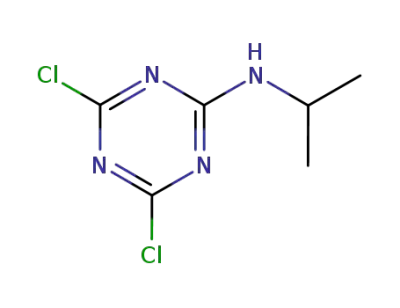
2,4-dichloro-6-isopropylamino-1,3,5-triazine
-
-
75-04-7,85404-22-4
ethylamine
-
-
1912-24-9,93616-39-8
6-chloro-N-ethyl-N'-isopropyl-1,3,5-triazine-2,4-diamine
| Conditions | Yield |
|---|---|
|
With
sodium hydroxide;
In
water; toluene;
at 15 - 20 ℃;
for 0.25h;
|
83.5%
|
|
With
sodium hydroxide;
In
water; toluene;
at 15 - 20 ℃;
|
|
|
With
sodium hydroxide;
In
water;
at 25 - 45 ℃;
|
2.What is the CAS number for Atrazine ?
The CAS number of Atrazine is 1912-24-9.
More information of Atrazine 1912-24-9 are:
|
CAS?Number |
1912-24-9 |
|
Density |
1.269 g/cm3 |
|
Melting Point |
175 °C |
|
Boiling Point |
368.5 °C at 760 mmHg |
|
Flash Point |
176.7 °C |
|
Vapor Pressure |
0.00156mmHg at 25°C |
|
Refractive Index |
1.6110 (estimate) |
|
HS CODE |
29336990 |
|
PSA |
62.73000 |
|
LogP |
1.92310 |
|
Pka |
pKa 1.64 (Uncertain) |
3.What are another words for Atrazine ?
Synonyms?for?Atrazine 1912-24-9:Cyazin;2-Chloro-4-(2-propylamino)-6-(ethylamino)-s-triazine;Fenamine;Atratol A;Radazin;Oleogesaprim;Triazine A 1294;Gesaprim 50;Atazinax;Hungazin;Actinite PK;Candex;Aktikon PK;Nu-Trazine;Aktinit PK;Inakor;2-Chloro-4-(ethylamino)-6-(isopropylamino)-s-triazine;Atrasine;ATZ;Pitezin;Azoprim;A 361;Atrataf;Cekuzina-T;Gesaprim L;
4.What is the molecular formula of Atrazine?
The chemical formula of ?Atrazine is?C8H14ClN5 which containing 8 Carbon atoms,14 Hydrogen atoms,1 Chlorine atoms and 5 Nitrogen atoms,and the molecular weight of??Atrazine?is 215.686.
5.What is Atrazine (1912-24-9) used for?
A major effort in evaluating the toxicity of the triazines is the cumulative risk assessment (CRA) conducted by US Environmental Protection Agency (EPA) as part of the tolerance reassessment process under the Food Quality Protection Act (FQPA) of 1996. The CRA (released 2006) was conducted for triazines as a common mechanism group (CMG), determined to have a ‘common mechanism of toxicity’ in acting the same way in the body, that is, the same toxic effect occurs in the same organ or tissue by essentially the same sequence of major biochemical events. EPA determined that atrazine, simazine, propazine, and the metabolites desethyl-s-atrazine (DEA), desisopropyl-s-atrazine (DIA), and diaminochlorotriazine (DACT) are considered as a CMG due to their ability to cause neuroendocrine- and endocrine-related developmental, reproductive, and carcinogenic effects. Other triazines, such as ametryn, prometryn, prometon, metsulfuron methyl, trisulfuron, chlorsulfuron, and DPX-M6316, were excluded because these triazines do not share the toxicity profile of the CMG triazines. Hydroxyatrazine was excluded based on the lack of mammary tumor induction and no compelling evidence of neuroendocrine-related toxicity. Propazine was excluded from the cumulative assessment group (CAG) because exposures to propazine are not anticipated via any of the relevant exposure pathways. Therefore, the cumulative assessment included only atrazine, simazine, DEA, DIA, and DACT, referred to as ‘triazine residues.’ For the triazines, the major toxicity of concern involves the neuroendocrine system with the key toxicity mechanism being luteinizing hormone (LH)-dependent effects. The changes in circulating endocrine hormones regardless of rat strain is the basis for assuming commonality of mechanism, which were noted in the same range of doses for these triazines. The relevance of the induction of mammary tumors in female Sprague–Dawley (SD) rats to humans continues to be a subject of discussion and research on the endocrine effects of triazines. Another consideration is whether the chemicals’ effects on endocrine responses have an impact on reproduction, development, and the brain related or unrelated to carcinogenesis. Significant research into the mechanism of mammary tumor formation was conducted in which the effects of atrazine, simazine, and other triazines were studied on estrus cycle, estrogen-mediated responses, estrogen receptor binding, and hormonal induction and metabolism in several species, but mostly in the rat. Both the in vivo and in vitro data suggest that atrazine and simazine disrupt ovarian cycling and induce mammary tumors in female SD rates, and alteration of the estrous state is directly associated with the incidence of mammary tumors. Atrazine and its metabolites appear to affect reproductive function of the male as well as the female reproductive and development parameters. However, they have not been tested with exposure at all critical periods of development in the young, evaluated in standard guideline neurotoxicity assay, and the earlier reproductive toxicity studies did not include sensitive measures of endocrine disruption that are now included. Additional studies have been published since the CRA in 2006. The US EPA FIFRA panel reevaluated the database and reaffirmed the conclusion on the toxicity of the triazines and the mammary tumor determination in 2010.
InChI:InChI=1/C8H16ClN5/c1-4-10-7-5-8(11-6(2)3)13-14(9)12-7/h5-6,11,13H,4H2,1-3H3,(H,10,12)
Relevant articles related to Atrazine:
|
Article |
Source |
|
Novel water method synthetic process of atrazine |
- Paragraph 0038-0039, (2017/02/28) |
|
Evaluation and Optimisation of the Reagent Addition Sequence during the Synthesis of Atrazine (6-Chloro-N2-ethyl-N4-isopropyl-1,3, 5-triazine-2,4-diamine) Using Reaction Calorimetry |
Barton, Benita,Gouws, Shawn,Schaefer, Melissa C.,Zeelie, Bernard , p. 1071 - 1076 (2013/09/05) |
6.Buy Atrazine with the best price .
Qingdao Spring Chemical Co.,Ltd. is a quality supplier of Atrazine. Our main goal is customer satisfaction. Contact us to negotiate the best price for your business on Atrazine 1912-24-9.
Related products
-
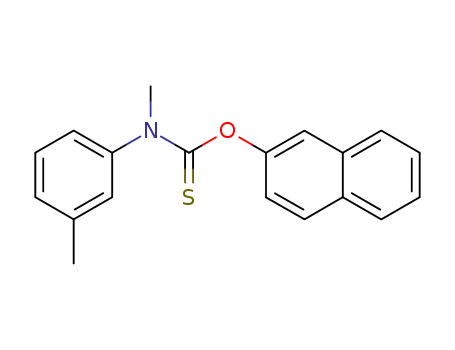
TolnaftateDetail
CAS:2398-96-1
-
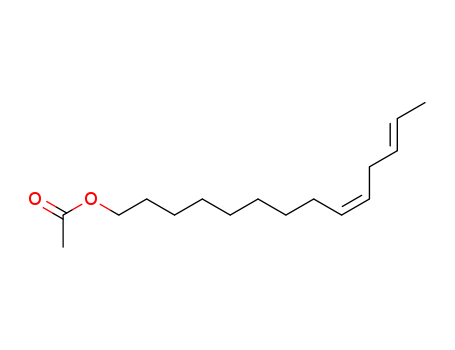
(Z,E)-9,12-TETRADECADIENYLACETATEDetail
CAS:30507-70-1
-
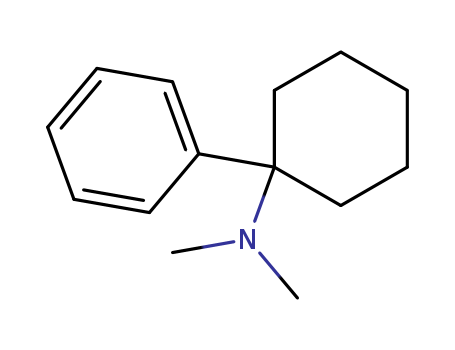
N,N-Dimethyl-1-phenylcyclohexanamineDetail
CAS:2201-17-4
-
Nisin ZDetail
CAS:137061-46-2